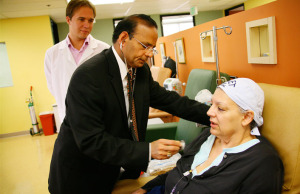
 September focuses on ovarian cancer throughout the month with medical providers like the Cancer Center of Southern California providing you with a lot of information and resources about the disease. One of the most important preventive actions you can take against this cancer is self-awareness; so this month, take advantage of the accessible information and educate yourself about ovarian cancer for early detection.
However, also keep in mind that it takes more than just knowing your body and developing sensitivity to physical changes. You also need to act on your suspicions by seeing your doctor. If you were to notice some unusual symptoms, a medical exam will verify whether you have a health threat or a less serious medical condition.
Ovarian cancer is treatable and early detection is one of the best ways to fight the disease. Like many of his medical associates, Dr. Sant Chawla of the Cancer Center is an advocate for patient information, so whether you reach out to the American Cancer Society, your local medical center, or even the Cancer Center of Southern California, learn about preventive measures you can take against ovarian cancer.
Who Is at Risk For Ovarian Cancer?
The disease tends to develop in postmenopausal women between ages 55 to 64, with diagnosis often around age 63. Epithelial ovarian cancer, which originates from tissue covering the ovaries, is the most common variety, appearing in 85% of ovarian cancer cases.
There are certain conditions which can increase the likelihood of developing this type of cancer, including:
- Never had a baby
- Unable to get pregnant
- Used hormone therapy during menopause
- Menstruation before age 12 and menopause after 50
If any of these conditions apply to you, it doesn’t mean that you will develop ovarian cancer, but you could be at a higher risk and should be watchful for any health changes. Typically, if these symptoms last beyond two to three weeks, you are encouraged to see your doctor.
Some common symptoms associated with early stage ovarian cancer include:
- Bloating
- Urinary incontinence
- Pelvic or stomach pain
- Irregular vaginal bleeding
- Feeling of fullness in stomach
You’ll notice that some of these symptoms are ones that you might have during menstruation. This is why it is so important that you have annual clinical exams that include a pelvic examination. If there are any suspicious masses, your doctor will feel a lump inside or on your ovary and order an ultrasound. For a conclusive diagnosis, a biopsy will be performed.
What Are Recommended Treatments?
Depending on the patient’s case and provided the cancer is diagnosed at an early stage, chemotherapy can be the only recommended treatment. Otherwise, surgery to remove the tumor and possibly both ovaries could be performed, supplemented by chemotherapy.
Participation in a clinical trial may also be suggested. The Cancer Center participates regularly in research which gives patients an opportunity to be treated with novel drug therapies that are often more effective than standard treatment. Dr. Chawla often leads these trials and has referred many of his patients who’ve responded well and achieved favorable outcomes.
Contact the Cancer Center Specialists Today
The physicians at the Cancer Center of Southern California have over 30 years experience treating cancer and specialize in advanced drug therapy solutions. They create a positive, supporting environment paired with personalized attention, making the Cancer Center unique in its field. If you or a loved one has been diagnosed with cancer recently or you are seeking another opinion about cancer treatment, please contact us at (310) 552-9999 to schedule a private consultation.
Learn more about patients’ stories at the Cancer Center.
Next, read Melanoma Prevention Begins in Childhood
The post September Is Ovarian Cancer Awareness Month appeared first on Cancer Center Southern California.

